

Sri Lanka's Southern Coast: Beaches, Whales and the Art of Doing Nothing
From Mirissa's Whale-Watched Waters to Arugam Bay's Perfect Breaks
Admin
Senior Travel Editor
The south coast road runs like a thought that cannot decide where it ends. You leave Galle Fort's white ramparts, turn east, and for the next four hours the Indian Ocean appears and disappears between coconut groves, fishing villages painted in boat-blue and coral-white, and stretches of tarmac so close to the water that the spray occasionally reaches the windscreen. This is one of the great drives in Asia — and what waits at its various stops is a complete education in the spectrum of what a beach can be.
Mirissa is a crescent of soft sand backed by a single palm-lined road where everything — bars, guesthouses, boat-hire operations, fish restaurants — faces the sea with a kind of cheerful insistence. By day it is a beach town with a serious marine wildlife offering. By night it becomes something looser and livelier. The headline attraction is unambiguous: blue whale watching. Between November and April, boats depart Mirissa Harbour before 06:00 to intercept the blue whale migration routes through the deep water channels off the southern tip of Sri Lanka. Blue whales — the largest animals that have ever existed on this planet — surface with a regularity that seems almost impossible. Sperm whales, spinner dolphins, and pilot whales accompany them. The crossing takes roughly 40 minutes from the harbour, and in good conditions, you will spend two hours on the water with multiple animals. It is, with very little competition, the single best accessible whale-watching experience in the Indian Ocean.
Mirissa Whale Watching: Everything You Need to Know
- 01
Book with an operator that uses a naturalist guide and limits vessel numbers around each animal — ethical operators exist in Mirissa and are worth seeking out.
- 02
The best months are December to April, with January to March being peak season for blue whale sightings.
- 03
Depart before 06:00 to reach the deep-water channels during the most active period. Tours returning after 10:00 have significantly lower sighting rates.
- 04
Take seasickness medication the night before if prone — the open ocean crossing can be rough, particularly December to February.
- 05
After the whale watch, walk to Parrot Rock — the small offshore islet at the eastern end of Mirissa Beach — for the best panoramic view of the bay. The climb takes 15 minutes and rewards with a view you will use as a screen saver for the next two years.

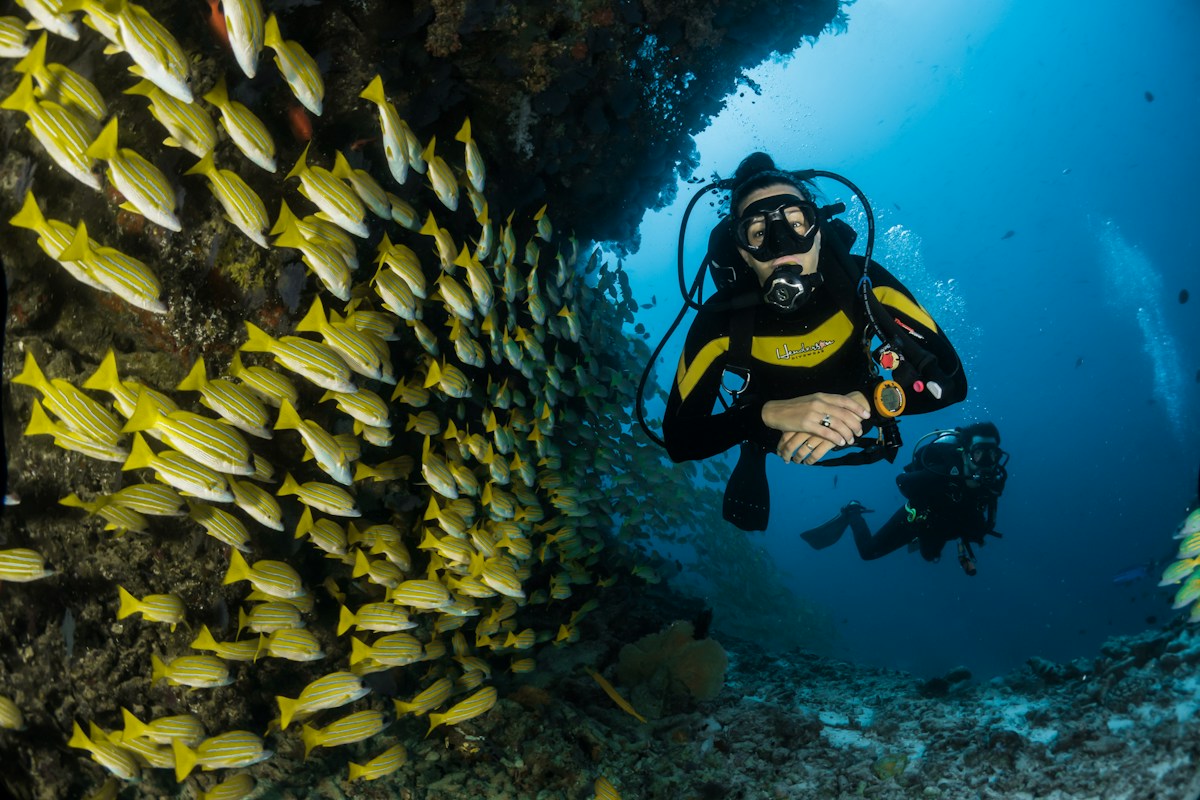
Six kilometres east of Galle, Unawatuna sits in a sheltered bay protected from the open swell by a reef that makes its waters reliably calm, warm, and transparent year-round. The beach itself is a gentle arc of pale sand lined with restaurants built so close to the water that the tables get wet at high tide — an arrangement everyone seems entirely comfortable with. Snorkelling on the reef in the morning, before the dive boats arrive, reveals moray eels, lionfish, and occasional sea turtles that feed in the shallow coral gardens directly off the beach. The walking trail around the headland to Jungle Beach — a smaller, quieter bay accessible only on foot — takes 25 minutes and delivers the kind of undiscovered beach that most travellers assume no longer exists within walking distance of a tourist area.
Weligama Bay's wide, shallow break rolls in with patient regularity across a long sandy bottom — producing a wave so forgiving that it has, over the past decade, become South Asia's premier learn-to-surf destination. Every morning between November and April, the beach is occupied by a democratic mix of first-timers, teenagers, and retired professionals, all being coached by young Sri Lankan instructors who combine genuine skill with extraordinary patience. Lessons start at approximately USD 15 per hour including board. The learning curve at Weligama is steep in the best possible way: most beginners are standing by the end of lesson two. For intermediate and advanced surfers, the reef breaks at nearby Midigama — Ram's Right is a powerful, fast right-hander — and at Hiriketiya, a horseshoe bay 30 minutes east, offer significantly more challenge.
“Sri Lanka's south coast does not ask you to choose between the beach you came for and the one you never knew you needed. It simply gives you both.”
Tangalle is where the south coast quiets. The town itself is functional and unbeautiful, but the series of bays stretching east from the harbour — Medaketiya, Marakolliya, Rekawa — are among the least-developed beaches in the south, backed by casuarina pines and accessible mainly by tuk-tuk or bicycle. Rekawa Beach is a nesting ground for five species of sea turtle, including the leatherback, the world's largest reptile. The Rekawa Turtle Conservation Project (operated by the Wildlife Conservation Society) offers ethical night walks between April and September when turtles come ashore to nest — guides lead small groups to within metres of nesting females without lights or disturbance. It is one of the quietest, most extraordinary wildlife encounters available anywhere on the island.
To reach Arugam Bay from the south coast requires commitment: a four-hour drive north along the eastern coastline, or the same time from Colombo in a different direction. The effort is rewarded immediately. The Bay's Main Point — a right-hand break that on its best days delivers rides of 200 metres or more — has been ranked among Asia's top ten surf destinations for three consecutive decades. The season runs from May to October when the southwest monsoon pushes consistent swells into the bay. During peak season (July and August), the lineup attracts surfers from 30 countries, yet the town maintains a rhythm of extraordinary ease — bicycles, stray dogs, beach cafés serving rice and curry at plastic tables, and an almost total absence of the infrastructure that makes other beach towns feel managed. Pottuvil Lagoon, directly adjacent, is one of Sri Lanka's finest birding wetlands and supports crocodile, elephant, and a bird list that justifies the journey independently of the surf.
Sri Lanka Beach Essentials: By Season and Coast
- 01
South and west coast (Mirissa, Unawatuna, Weligama, Hikkaduwa): Best November to April. Calm seas, minimal rain, ideal for whale watching and swimming.
- 02
East coast (Arugam Bay, Trincomalee, Nilaveli, Pasikudah): Best May to October when the southwest monsoon keeps the east coast dry and the surf consistent.
- 03
Year-round swimming: Pasikudah, on the east coast, has the shallowest, most sheltered water in Sri Lanka — a lagoon-style bay so calm it is almost surreal even during monsoon season.
- 04
Sea turtle nesting: Rekawa (April–September), Kosgoda (year-round), and Induruwa are the principal turtle watching sites — always use accredited conservation projects.
- 05
Hire a tuk-tuk for the day rather than using taxis for coastal exploration — they reach beaches inaccessible to larger vehicles and make the journey as good as the destination.
Photo Journal
4 Images from the Field

The southern coast at golden hour — 1,600 kilometres of coastline, and each kilometre different from the last

Unawatuna from above — the reef that shelters the bay is visible even from altitude
A blue whale off Mirissa — the largest animal on earth, and entirely worth the 05:30 alarm call

Arugam Bay's Main Point — a right-hander that has drawn surfers from every continent since the 1970s
Admin
Senior Travel Editor
Spent over a decade exploring every corner of Sri Lanka, from its misty highlands to its sun-drenched southern coastline. She writes with the precision of a journalist and the warmth of a local.
Want This Experience
For Yourself?
Our guides have the access, knowledge and contacts to make experiences like this happen for you.